The question that lands in my inbox more than any other right now comes from women who are trying to conceive, and it's almost always worded the same way: What am I actually supposed to be taking?
Sometimes it's month three. Often it's month fourteen. There's a prenatal on the counter that may or may not be the right one, a bottle of something from a book, a tab open to a forum thread, and a quiet worry about choosing wrong. Between tracking, testing and waiting out the two weeks every single cycle, the supplement part was supposed to be the easy part. It isn't.
So we did the comparison. We pulled the labels, the serving sizes, the formats and the storefront prices for seven of the routines women most often ask about, read a few hundred of their customers' reviews, and lined them up on the same four questions. We can't tell you what will get you pregnant. Nobody honest can, and anybody promising otherwise is selling you something. What we can do is tell you which routines cover the whole job, which ones you'd realistically keep up, which ones print their numbers, and what each one really costs for three months.
Here's what we checked, and then here's the ranking.
What We Checked
The thing most of us learn late is that fertility support is two jobs, not one. A prenatal does the first job: the foundation, folate and vitamin D and the nutrients a pregnancy will draw on. The second job is the cycle you are in right now, ovulation and regularity, and almost nothing in a standard prenatal was put there for it. That's why the fertility aisle exists. It's add-ons for the job your prenatal isn't doing, sold one bottle at a time.
So we scored each routine on four things:
Could you keep it up every day. Format and daily load. How many pills, how many scoops or sticks, how many separate products. Drinks and daily packs score high. A shelf of bottles scores low.
Does it cover both jobs. The cycle and the foundation, with the forms the research used. For the cycle side that means myo-inositol and D-chiro-inositol together, at a 40:1 ratio. For the foundation it means folate as methylfolate, real vitamin D, and enough else to matter.
Can you read the label. Every ingredient and every amount printed. No proprietary blends, which are the industry's way of saying "trust us."
What three months costs. An egg spends roughly ninety days maturing before it's released, so three months is the honest window to judge any routine on. And the real price is what the complete routine costs, not what one bottle costs.
The Rankings

#1: Molo, The Molo Fertility Protocol (Ovulation + Prenatal)
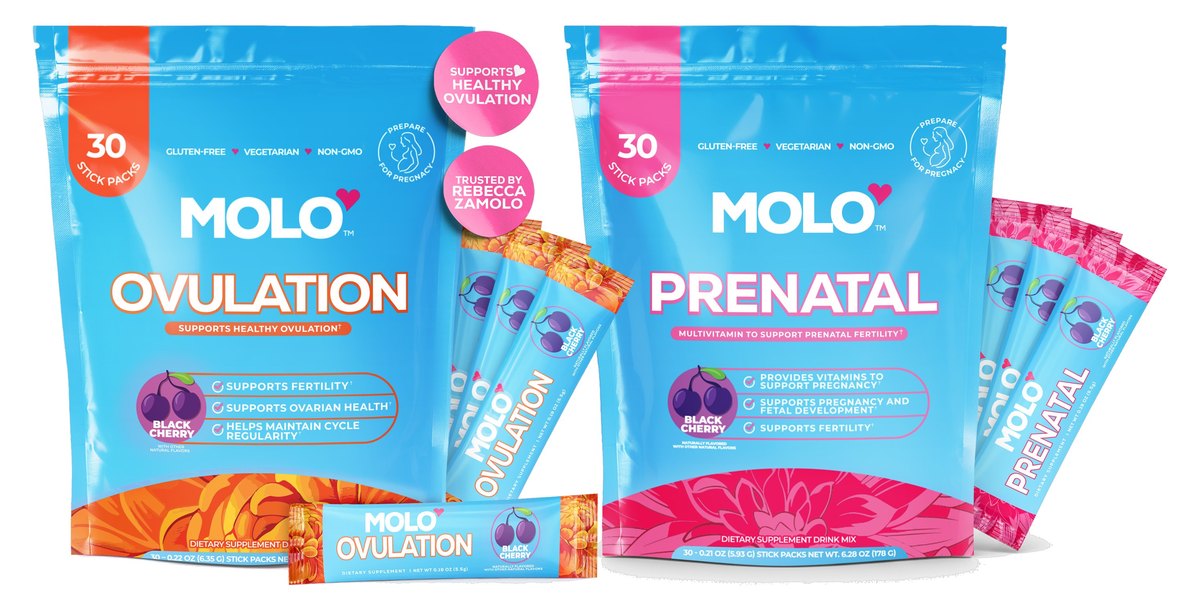
Molo was formulated by Christina Westbrook, MBA, MSN, the Chief Nursing Officer of a fertility clinic in Los Angeles, and it started as the list she wrote by hand for her patients: a 90-day protocol of about fourteen pills a day. Co-founder Rebecca Zamolo was one of those patients. The two of them turned the list into two stick packs. That origin matters, because it means someone designed this as a routine for women who are trying, not as one more bottle for the shelf.
Here's what's in it. Ovulation is the cycle side: myo-inositol and D-chiro-inositol at the 40:1 ratio the research uses, as a branded form called Caronositol®, plus vitamin K2 (MenaQ7®), vegan D3 from algae, chelated zinc, and antioxidants from pomegranate, green tea and date fruit. It supports healthy ovulation and more regular cycles. Prenatal is the foundation: 600 mcg of folate as methylfolate (the active form, the one your body doesn't have to convert), 1,000 mg of vitamin C, 2,000 IU of vitamin D3, 50 mg of CoQ10, 50 mg of ginger root, a full B-complex, chelated iron and zinc, and algal DHA. It gets your body ready before you conceive.
The reason it ranks first is the format. Both are powders you stir into cold water, one of each a day. No pills. Strawberry Kiwi or Black Cherry, sweetened with monk fruit, no added sugar, and you can mix flavors on the 90-day plan. If you have ever stood at the sink with a horse-sized prenatal and a glass of water, quietly deciding it can wait until tomorrow, you understand why that is the whole review.
No proprietary blends, third-party tested, made in the USA. And the price is the part worth checking twice: $49.99 a month on the 90-day plan for both sticks, free shipping, $1.67 a day. The shelf version of the same routine runs close to $200.
"The stick packs are actually pleasant, easy to take with a little water."
"Actually tasty and not overpowering. I was pleasantly surprised."
"I love that it comes in pre-measured stick packs, so there is no guessing or swallowing pills."
"…this supplement gives me something just as important: hope."
Two things to know before you buy. Molo Prenatal is built for the months you're trying, not for pregnancy. It has 4.5 mg of iron and no choline, so the day you get a positive, bring the label to your OB. Molo says this itself, on its own site, which is a point in its favor. And Molo lists every ingredient in Ovulation but hasn't published every amount yet. We'd like to see the numbers. That's the one point we took off.
Our take: This is the one we'd hand to a friend who's trying. It covers both jobs, it costs less than the shelf, and it's the only routine on the list built to still be in your hand in week ten. Best overall.
At the time of writing, Molo's 90-day Protocol was 47% off the one-time prices, with a free shaker bottle.
Visit Site →Quick thing before the rest of the list, because it changes how you read every label from here on.
When you're comparing fertility supplements, the trap is comparing bottles. A $36 bottle looks like a better deal than a $50 one until you notice the $36 bottle does a third of the job and you'll need two more bottles to finish it. So every cost score below is for the complete routine, cycle and foundation, whatever that takes with that brand. It changes the rankings more than anything else.
The other trap is the word "blend." When a label says "Fertility Blend, 1,200 mg" and lists six herbs under it, you don't know if the one you bought it for is a full dose or a sprinkle. For a product you're taking every day for a reason this important, you want the number.
Molo is our top pick. Here's everything else, in order.
#2: Perelel, Conception Support Pack
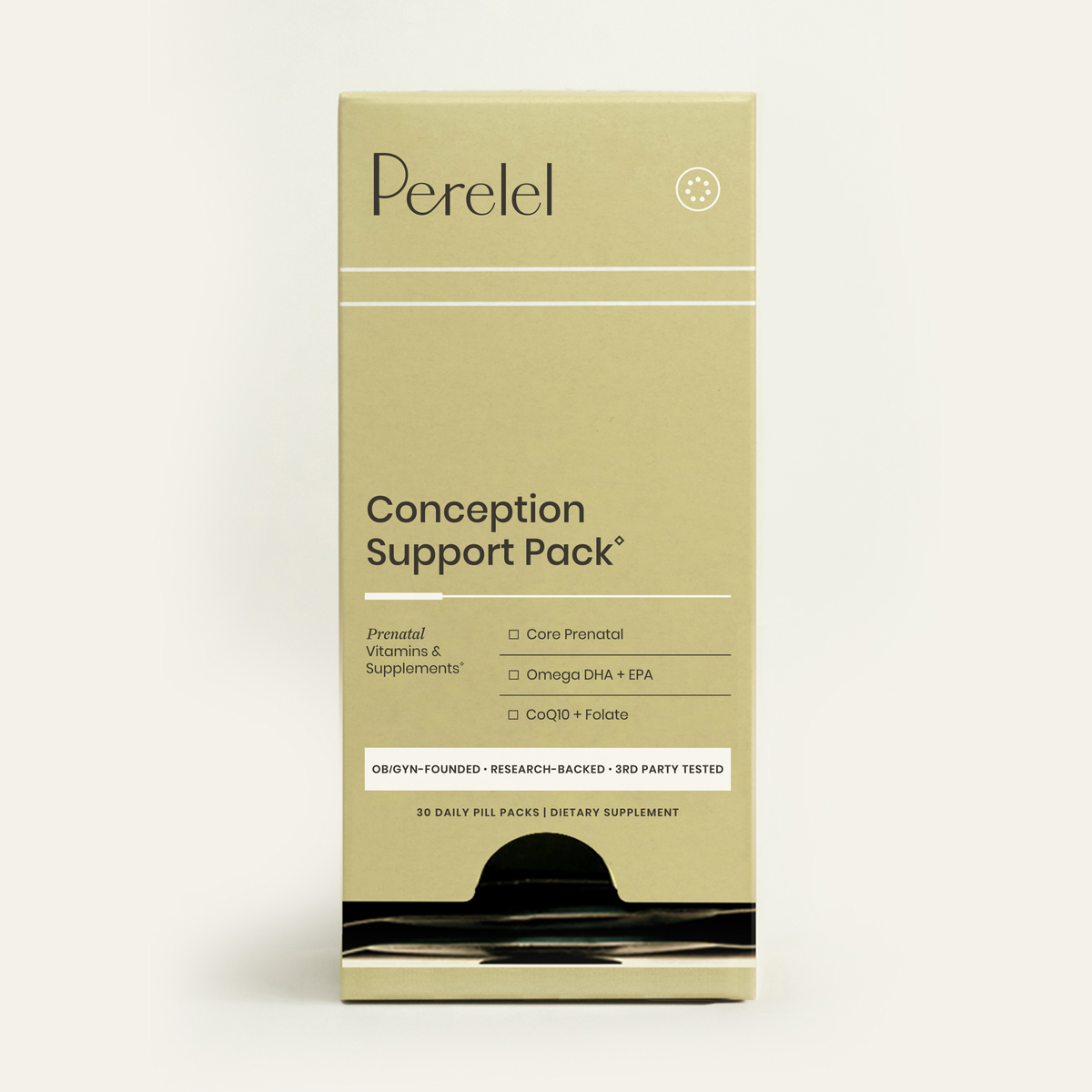
If pills don't bother you, Perelel is the smartest pill routine we compared. Each daily pack has four capsules: two of their core prenatal, one CoQ10 plus extra folate, and one omega DHA/EPA. It was formulated by a panel of OB/GYNs and reproductive endocrinologists, the packs are dated, and the whole thing feels designed by grown-ups. When you get pregnant, their subscription moves you to a first-trimester pack automatically, which is clever.
What it doesn't have is inositol. There's no myo-inositol or D-chiro anywhere in the Conception pack, so the cycle side of the job is missing unless you add their separate Fertility+ Support ($47), which is more antioxidants, not inositol. And it's four capsules a day, every day. Reviewers who like it tend to say they like the organization of the packs; the ones who don't mention the softgel.
Our take: The best pill routine on the list and the one to pick if you love capsules. Most women trying to conceive tell us they don't, which is why it's second.
Visit Site →#3: Ritual, Fertility Support (+ Essential Prenatal)
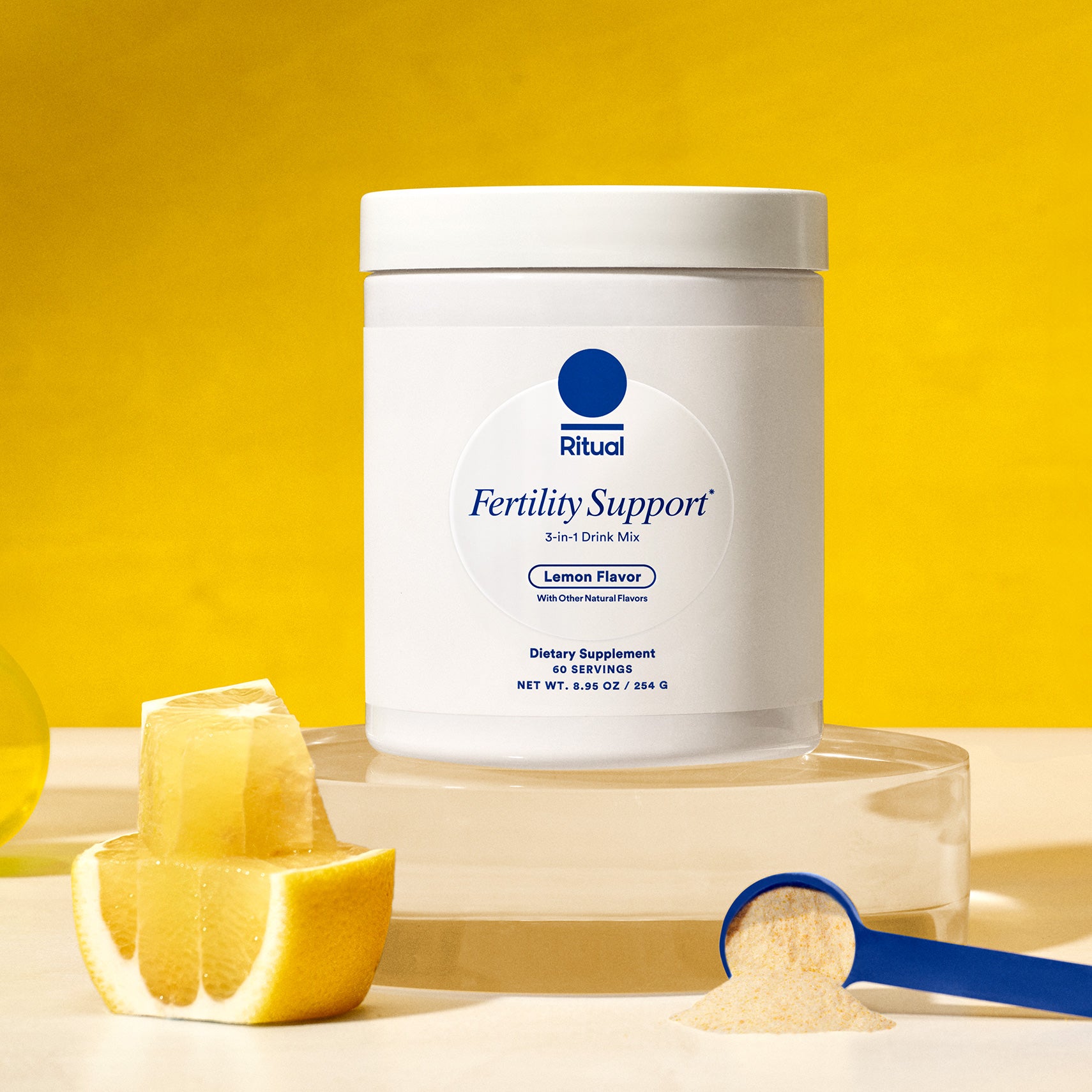
Ritual is the brand that made the whole industry start printing where its ingredients come from, and we respect them for it. Fertility Support is a drink mix: one 4 gram scoop delivers 4 grams of myo-inositol, 1.2 grams of NAC and 200 mg of CoQ10, sugar-free, vegan, every amount on the label and every supplier traceable. Reviewers describe it as mild and unflavored.
Two problems. It's myo-inositol only, no D-chiro, so you don't get the 40:1 pair. And it isn't a prenatal, so the foundation is a second product, their Essential Prenatal, two capsules a day at $44.32. At regular price the complete routine is about $143 a month, the most expensive on this list, and you're still swallowing something.
Our take: If you want the most documented inositol drink on the market and money isn't the constraint, Ritual is excellent. For most women it's nearly three times the cost of Molo and still leaves you with capsules.
Visit Site →#4: Needed, Prenatal Powder + Egg Quality Support
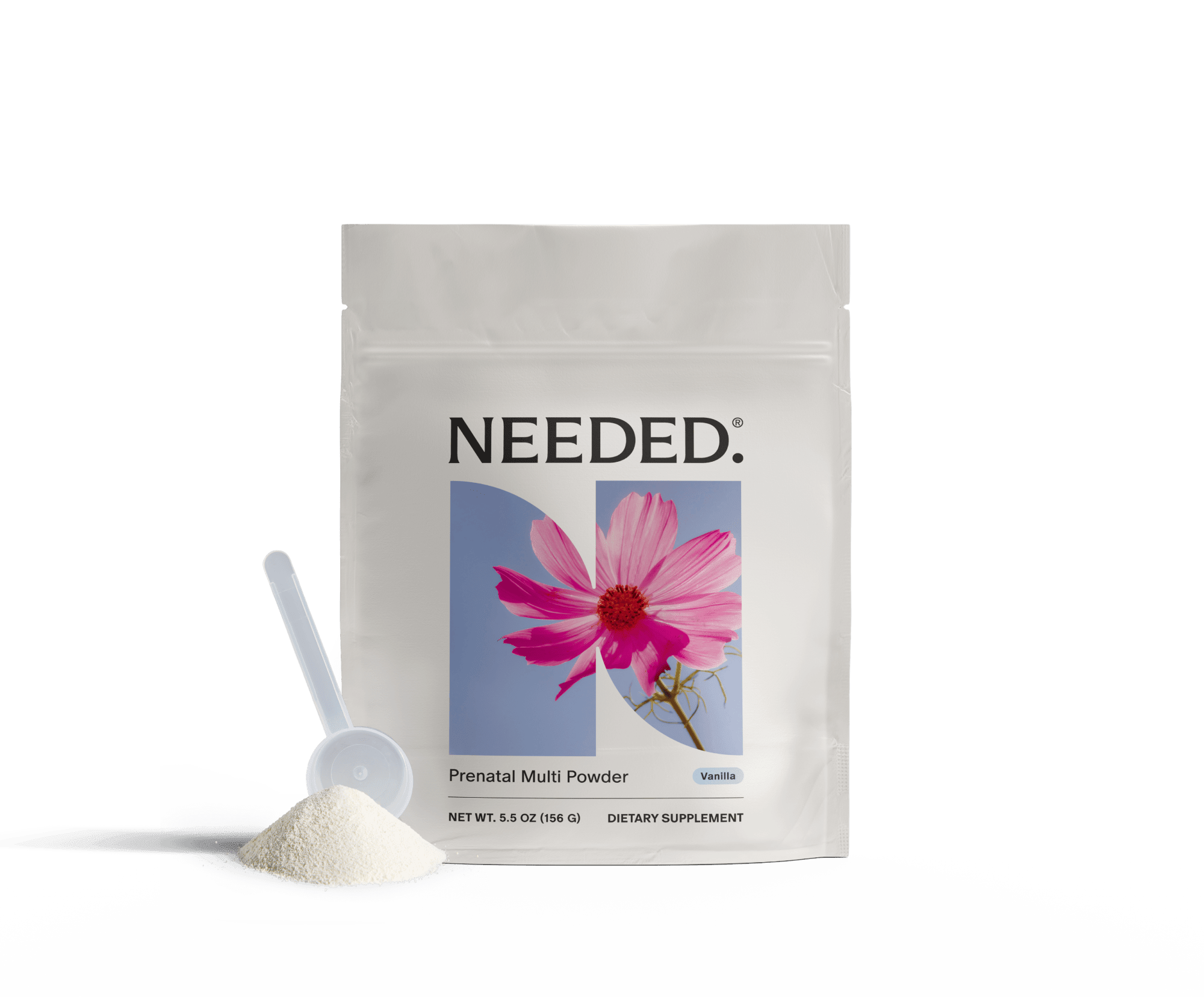
Needed is the brand practitioners recommend, and their prenatal powder is the drinkable version of a prenatal that normally takes eight capsules. One scoop of vanilla, 22 nutrients, doses that read like a textbook. If your only goal is a serious foundation in a smoothie, this is the one.
The cycle side is where it gets awkward. Needed's answer is Egg Quality Support, two capsules of antioxidants they recommend starting three months before trying, for another $49.99. So the drinkable part is the prenatal and the fertility-specific part is back to capsules, and there's no inositol in either one. The complete routine is $102.98 a month.
Our take: The best drinkable prenatal here, attached to a capsule for the part you came for. Great foundation, doesn't solve the pill problem, costs double.
Visit Site →#5: FullWell, Prenatal Stick Packs + Alpha Inositol+
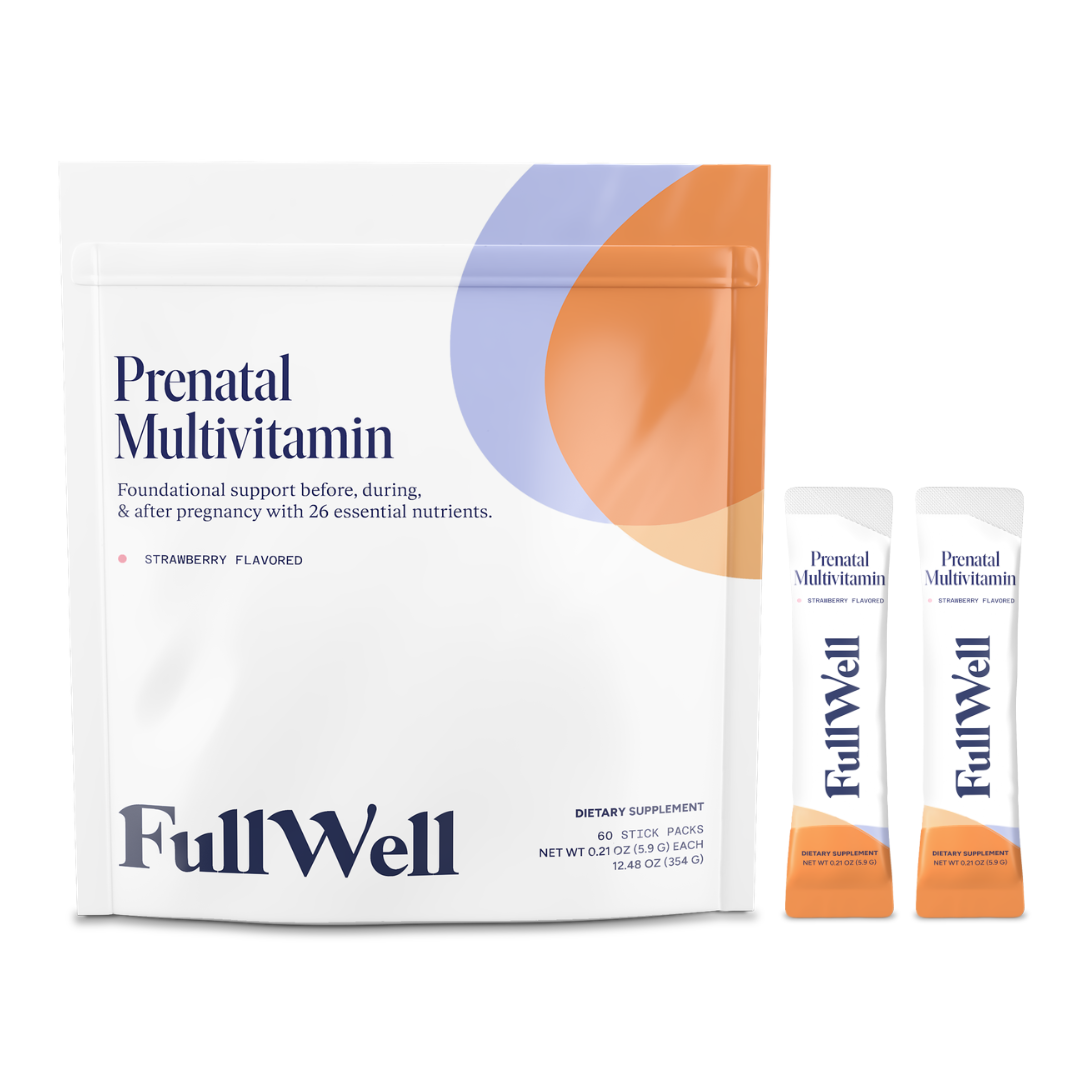
FullWell was founded by a dietitian and it shows. Their prenatal is one of the most complete we've seen, with choline, iodine, magnesium and real vitamin D at doses most brands skip, and the stick pack version puts all of it in a strawberry powder. Add their Alpha Inositol+ sticks (a 40:1 myo and D-chiro blend, orange cream flavor, taken twice a day) and you've technically got both jobs in powder form.
Technically. The prenatal is two sticks a day, the inositol is two more, so you're mixing four sticks and almost 12 grams of powder every single day, and the inositol uses a whey-derived protein for absorption, so it's out if you're dairy-free. Together it's $118.92 a month. The reviews split along one line: women who love the formula, and women who stopped mixing the second stick.
Our take: The strongest formula on the page and the most demanding routine. If you have the budget, tolerate dairy, and will mix four sticks a day for three months, it's superb. Most women won't.
Visit Site →#6: Pink Stork, Fertility Support
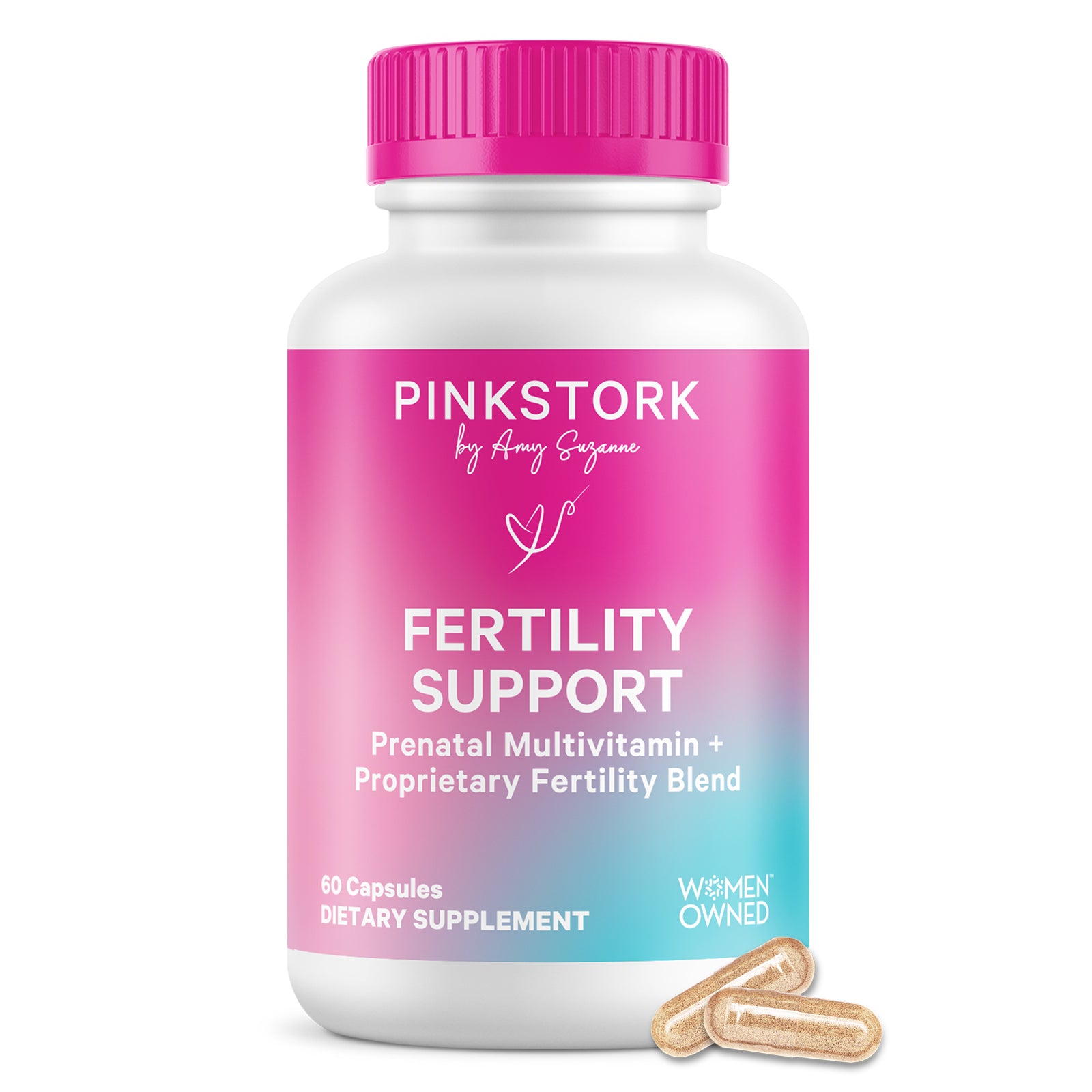
This is the one everybody buys on Amazon (almost 4,000 reviews on this product alone), so it had to be on the list. Two capsules a day, 17 vitamins, plus a botanical blend with vitex (chaste tree berry), myo-inositol and ashwagandha, for $36. It's affordable, it's everywhere, and the reviews are real.
Our hesitation is the blend. Vitex and ashwagandha are herbs with real effects and real cautions, and both live inside a proprietary blend where you can't see the dose of either. We'd want a clinician's okay before taking either one daily while trying to conceive, and we'd want the number. Pink Stork gives you neither.
Our take: The most popular product on this list and the one we'd most like to see reformulated. Fine as a budget capsule, but "trust us" isn't a dose.
Visit Site →#7: Building It Yourself (the "It Starts with the Egg" shelf)
For the record, the routine most women trying to conceive actually run: a prenatal, a bottle of CoQ10, a 40:1 inositol powder, vitamin D3 with K2, an omega-3, an antioxidant, and zinc with selenium, assembled from a book and a forum thread. Seven bottles, somewhere around fourteen pills a day, and total control over every ingredient.
It can be done well. A 40:1 inositol from NatureWise is about $22, and if you are disciplined about forms and doses you can build something excellent. The problem isn't the formula. It's that almost nobody keeps it up. Bottles run out on different days, the expensive ones get skipped, and by week six the organizer is half empty. And the money is anywhere from about $100 a month with store brands to around $200 with the brands the book recommends.
Our take: Perfect for the one woman in fifty who will actually maintain it. For the rest, it's the most expensive way to take half a routine.
The bottom line
Why Molo Is the Fertility Routine We'd Recommend
When you're trying to conceive, the supplement question stops being casual. Every month feels like it counts, every article adds one more thing, and the shelf grows. What putting this list together made plain is that the shelf isn't the answer. The routine you can actually finish is.
That's why Molo won.
Seven routines, four questions. Most fell short somewhere. Half a routine at a full price. Four sticks a day. A drink-mix brand with a capsule hiding in it. A blend where the numbers should be.
Molo was different. Two drinks designed together by a fertility nurse to do both jobs: 40:1 inositol with K2, D3 and zinc for the cycle you're in, and methylfolate with vitamin C, D, CoQ10 and ginger for the foundation underneath it. No added sugar, no pills, no blends, $49.99 a month on the 90-day plan, and the 90-Day Window Guarantee that covers an opened bag.
If you're trying, and the thought of another bottle of capsules makes your stomach turn, this is the one. It's simple, it's honest about what it is, and it's one small thing that's yours to do every morning while everything else takes its time.
Give it about three months, the time an egg takes to mature. If you've been trying for a year, or six months if you're 35 or older, talk to your doctor too. Whatever you choose, take it every day, bring the label to your appointments, and be kind to yourself in the meantime. That part isn't on any label.
Our #1 pick for women trying to conceive
Two nurse-formulated stick packs, Ovulation and Prenatal, stirred into cold water. 40:1 inositol, methylfolate, vitamin D, CoQ10 and ginger, no added sugar, no pills. $1.67 a day on the 90-day plan, with the 90-Day Window Guarantee.
Shop Molo →These statements have not been evaluated by the Food and Drug Administration. These products are not intended to diagnose, treat, cure, or prevent any disease. Molo is a dietary supplement, not a fertility treatment, and is not a substitute for medical care. This post is not medical advice. Talk to your healthcare provider before starting any supplement, and if you are in fertility treatment your clinic's protocol always comes first. This post is sponsored by Molo; The Good After may earn a commission from links on this page. The writer did not use these products; the comparison is based on published labels, storefront prices and customer reviews. Molo review quotes are from Amazon and are reproduced word for word; reviews marked Amazon Vine were written by reviewers who received the product free, and reviews marked "earlier formula" refer to Molo's previous Conception Sweet Orange formula. Molo prices are from molotime.com as of October 2026; other brands' prices were checked on their storefronts in September 2026 and may have changed. Christina Westbrook and Rebecca Zamolo are co-founders of Molo and have a financial interest in the company.
Want to read a label the way we do? Here's how to read supplement labels.